
Real Issue with Traffic & Conversion
Data Driven Marketing - Missing
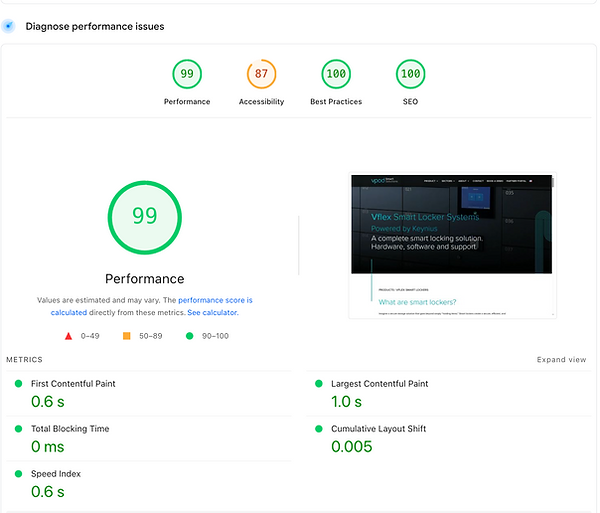
1. Page Speed not being Measured - Fixed Google Lightning
2. Ownership & Access changed - Rory
3. Purity Feedback - 77.6% traffic lost after 8 secs - see before and after page speeds
4. 77.6% - 100% page abandonment - worse than 8 secs
5. Research says focus on 5 Campaigns 1.Asset 2.Parcel 3.Smart Locker 4. Padel 5. Competition


Asset Management
Analysis for PPC
1. 2-3% Conversion not 6% minimum
Impact: 1/3-1/2 leads
2. See Below Page Load Speed now


Before
After


Before
After

Page Load Speed - Worse than Poor
Forecast
Content of page 2-3% conversion
Reduce that by 77.6%
As that is the current abandon rate after 8 secs
Reduce that by 100% as it loads in 13.8 Secs
Google and AI don't even read the content


Padel PPC Page

Before
After


Summary
Phase 1 Ready
Web Pages
Purity 1 week conversion test - Monday
- 2-3% conversion
Phase 2
Switch to Landing Pages
- 4% Conversion
- Next Monday week
Phase 3
Switch to Landing Pages with Powerful Asset Trades
-6% conversion
-2 weeks Monday
Why shoot for higher than 4% conversion?
1. 5 weeks till christmas lull
2. 2 weeks in January WAFT
3. Get ahead on Leads
Exec Summary
Current Web Pages
-
Asset
-
Padel
-
Smart Locker
Directing PPC Campaign at the current Web Pages
Would lose 30-50% of the target 30 leads


FAQs: Vpod Case Study — Page Speed, PPC Conversion & Data-Driven Marketing
1. What was the main issue identified in the Vpod case study?
The core issue was a serious loss of traffic and conversions caused by slow page load speeds. Google Lighthouse reports showed pages taking up to 13.8 seconds to load — resulting in 77.6–100% abandonment before content was even visible.
2. How did poor page speed impact marketing performance?
Slow loading meant Google and AI crawlers often failed to read or index content, while users dropped off after 8 seconds. Conversion rates fell to 0–2%, well below the 6% benchmark expected from optimised landing pages.
3. What steps were taken to fix the issue?
-
Google Lighthouse optimisation to improve speed scores.
-
Ownership and access to website corrections to ensure technical accountability.
-
Purity PPC engineer, testing to measure before-and-after results.
-
Landing page redesign with lighter code and cleaner structure.
-
Switch to campaign-specific PPC landing pages replacing low conversion web pages.
4. What were the before-and-after results of the fixes?
After optimisation, pages loaded in a fraction of the previous time. The goal is to move from a 0–2% conversion rate toward 6–8%, recovering an estimated 300% –500% of previously lost leads.
5. Which campaigns were prioritised for improvement?
Research identified five core PPC campaigns to focus on:
-
Asset Management
-
Parcel Management
-
Smart Lockers
-
Padel Lockers
-
Competition / Benchmarking Campaigns
6. Why is page speed such a critical marketing metric?
A page taking longer than 8 seconds to load loses over 70% of visitors. At 13+ seconds, Google and AI models stop crawling — meaning your ad spend drives traffic that never converts or even gets tracked.
7. What’s the planned roadmap for improvement?
Phase 1: Test existing pages (2–3% conversion).
Phase 2: Deploy fast landing pages (target 4% conversion).
Phase 3: Launch high-performance pages with strong value trades (target 6%+ conversion).
The objective is to fix page speed, relaunch campaigns, and scale lead volume before the seasonal slowdown.
8. What results are expected once optimisation is complete?
Once new landing pages hit a 6–8% conversion rate, PPC efficiency is forecast to triple — turning the same ad budget into 2–3× more qualified leads.
9. What lessons can other SaaS or tech firms learn from this?
-
Never ignore page speed audits — they directly affect ROI.
-
Use data-driven testing (Google Lighthouse, Purity reports).
-
Don’t rely on general web pages for PPC — use purpose-built landing pages.
-
Link marketing metrics (traffic, conversion, ROI) to business outcomes.
10. What’s next for Vpod’s PPC and landing page optimisation?
Once speed and design fixes are completed, Vpod will relaunch PPC across its five core campaigns — aiming for 90+ page-speed scores and measurable ROI uplift within six weeks.