
Data-Driven Marketing the Growth Engine SMEs Need

Updated: Oct 27, 2025

Introduction: Marketing Without Data Is Guesswork
In today’s hyper-competitive marketplace, small and mid-sized businesses (SMEs) cannot afford to gamble on vague marketing strategies. Budgets are tighter, ROI scrutiny is sharper, and CEOs want results they can measure — not vanity metrics.
This is where a data-driven marketing consultancy changes the game. By applying analytics, evidence, and performance frameworks, it gives business leaders the clarity to make smarter decisions, cut waste, and fuel sustainable growth.
What Is Data-Driven Marketing Consultancy?
At its core, data-driven marketing consultancy is about replacing opinion with evidence. Instead of guessing which campaign will work, consultants use tools and analytics to uncover what really drives engagement, enquiries, and sales.
A consultancy of this kind focuses on:
Marketing analytics: pulling insight from Google Analytics, CRM data, SEO platforms, and paid media.
Customer journey mapping: identifying pain points, conversion leaks, and opportunities to improve.
ROI measurement: showing exactly how marketing spend links to revenue.
Practical execution plans: giving businesses actions they can implement immediately.
It’s not about overwhelming reports. It’s about clarity, transparency, and measurable growth.

Why SMEs Need Data-Driven Consultancy More Than Ever
For SMEs, every marketing pound counts. Unlike corporates, there’s little room for waste or slow-moving campaigns. The key challenges include:
Budget Pressure & Talent Scarcity – Hiring a full-time CMO or large agency is costly. A consultancy model delivers expertise without overheads.
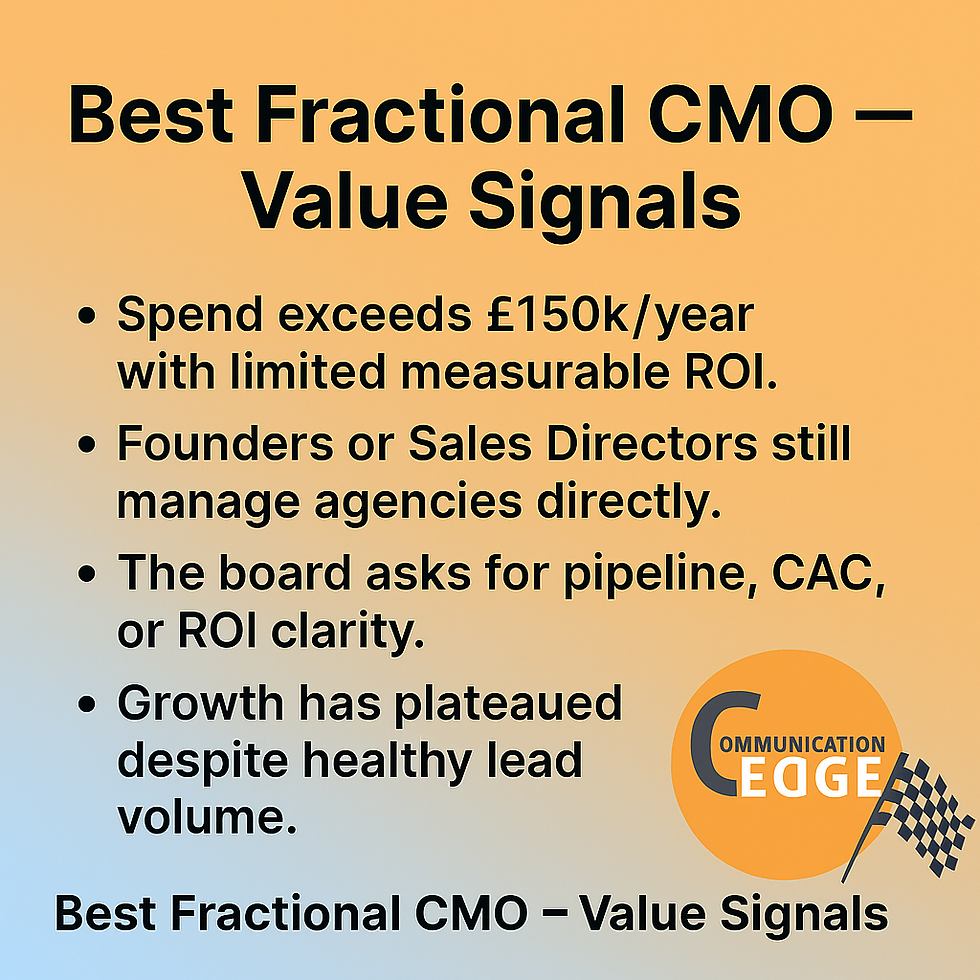
The Measurement Imperative – Boards and investors now demand ROI clarity, not vanity metrics.
Complex Customer Journeys – Buyers research across multiple touch points

Conclusion why data driven marketing works?
The SME's of today are run by people who want results in three areas:
Technical website and digital marketing performance - so content ranks and drives traffic.
A Content marketing plan that targets keywords that drive traffic and execution that ranks in the top 3 - 10 on page 1.
A MQL to deal pipeline built from that content.
It requires a mix of data driven marketing and sales empathy, because if marketing doesn't drive all three numbers then marketing becomes a very expensive COST!
Secondly AI has "moved the goal posts" in a good way, a small team of three led by a fractional CMO can:
Plan & Execute 10X faster than 2 years ago.
They can produce 15X more content than 2 years ago - that ranks.
They cost 30-40% less.
Third, not blessed with patience or suffering fools gladly, MD & CEO's want:
Visible improvement in the numbers daily across all three areas.
Once you have momentum and measurable growth their mindset shifts.
They then pass you their trust wand and begin to see data driven marketing for what it is "an investment in growth."
FAQs: Why Data-Driven Marketing Consultancy Is the Growth Engine SMEs Need
1. What does a data-driven marketing consultancy actually do?
A data-driven marketing consultancy helps businesses make smarter marketing decisions by analysing performance data, identifying what works, and aligning campaigns with measurable growth goals. It replaces guesswork with evidence-based strategies.
2. How is a data-driven consultancy different from a traditional marketing agency?Traditional agencies often focus on creative output; data-driven consultancies, like Communications Edge, start with analytics and commercial KPIs. Every activity is tracked, optimised, and linked to ROI.
3. Why is data-driven marketing important for SMEs?
SMEs operate on tighter budgets and need every pound to count. Data-driven marketing ensures spend is optimised, results are measurable, and future campaigns are guided by clear performance insights.
4. What kind of data should SMEs track?
Key metrics include website traffic quality, lead-to-customer conversion rates, customer acquisition cost (CAC), lifetime value (LTV), and ROI per channel. These metrics reveal where marketing truly drives growth.
5. How quickly can data-driven strategies improve results?
Most SMEs begin to see measurable improvements within 60–90 days once analytics, dashboards, and tracking frameworks are properly set up and optimised.
6. Do data-driven consultancies work alongside existing teams or replace them?
They integrate with your current team. Communications Edge, for example, provides strategic leadership and performance frameworks while enabling your internal marketers or agencies to execute more effectively.
7. What tools are typically used in data-driven marketing?
Common platforms include Google Analytics 4, HubSpot, Looker Studio, and various AI-powered dashboards that consolidate metrics and automate performance reporting.
8. How does data-driven marketing help reduce wasted spend?
By analysing attribution data and engagement trends, SMEs can shift budget to the channels and messages that convert best — cutting unnecessary costs and improving ROI.
9. Is data-driven marketing suitable for all industries?
Yes. Whether you’re in B2B services, e-commerce, technology, or manufacturing, data-driven principles adapt to any business that values measurable growth and accountability.
10. How can Communications Edge help SMEs become truly data-driven?Communications Edge provides a clear measurement framework, connects all analytics tools, and delivers board-ready dashboards that link marketing performance directly to pipeline and revenue outcomes.


Comments